Kali
काली
Goddess of Time
The first Mahavidya — Time itself, which swallows every form and frees the seeker from fear of endings.
Beej: क्रीं (krīṃ)
Story, iconography & mantraShow less
Iconography
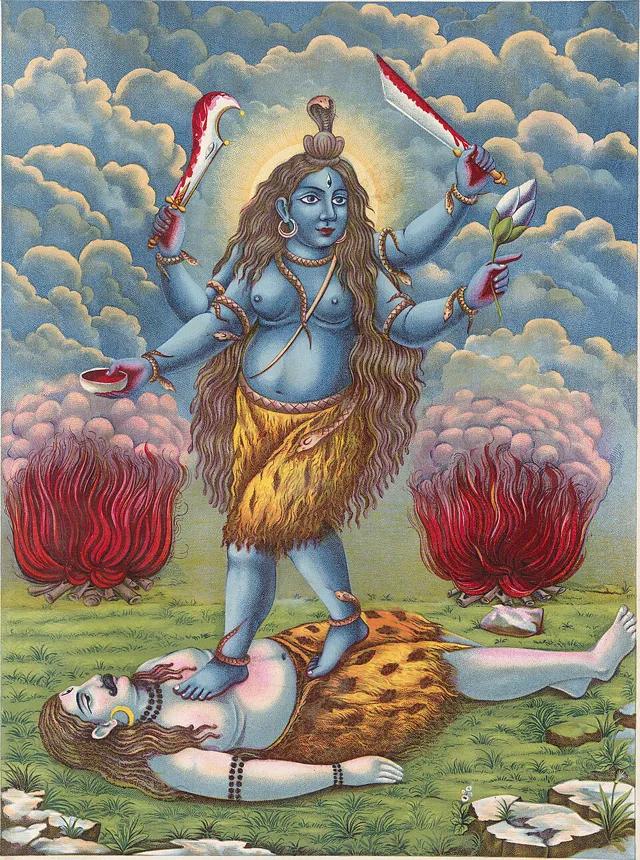
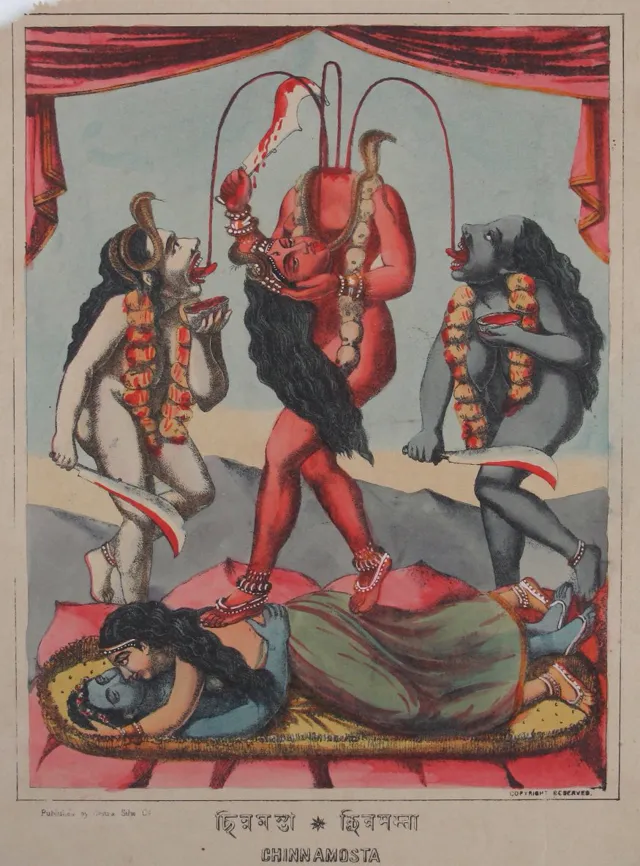
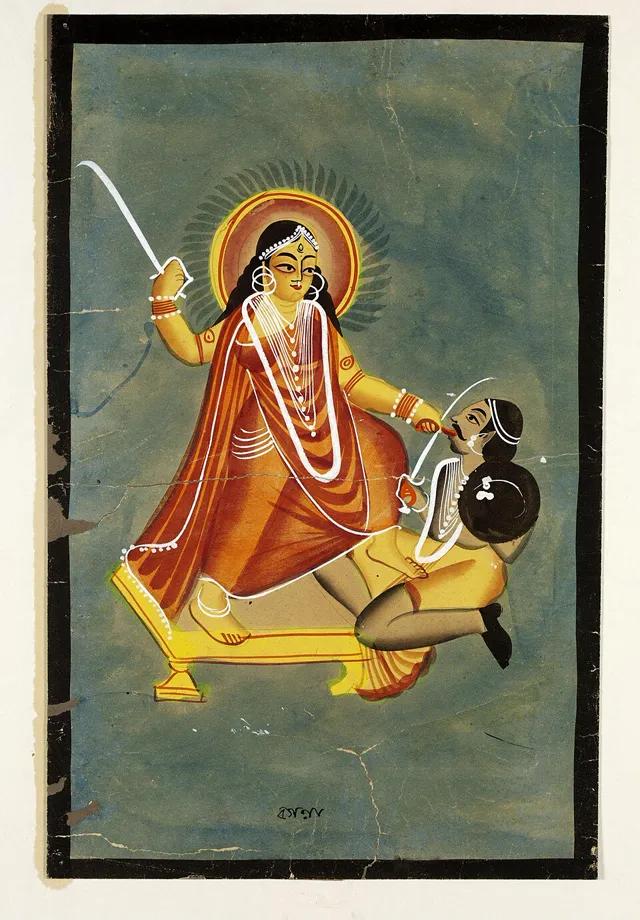
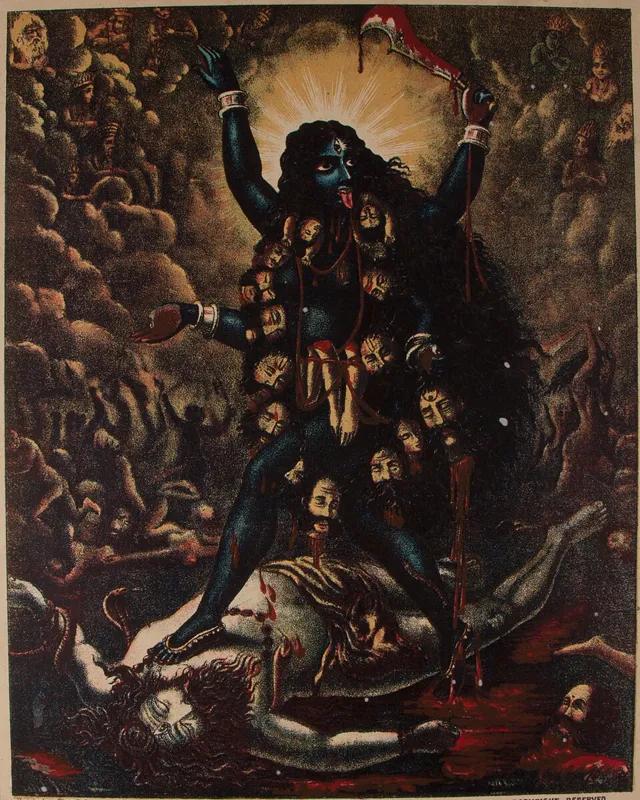
Dark as a moonless night, with loose hair and a lolling tongue. She has four arms: one holds a curved sword, one a freshly severed head, while the right hands show the gestures of fearlessness and of granting boons. She wears a garland of heads and a skirt of arms, and stands upon Shiva, who lies calm and white beneath her.
Legend
When Sati resolved to attend her father Daksha’s sacrifice and Shiva forbade it, her anger took shape first as Kali — dark, vast and terrifying. In the Devi Mahatmya she also springs from Durga’s brow to destroy the demons Chanda and Munda, and later drinks the blood of Raktabija so that no new demon can rise from it. The image of her foot on Shiva is often told as the moment her wild victory dance is stilled by his surrender.
Significance
Kali stands for the truth that everything made will be unmade. Her frightening look is meant to break the ego’s attachment to body and name; the heads she wears are read as the letters of the alphabet — the sounds from which all names are built. To her devotees she is the most tender of mothers precisely because she removes what is false.
क्रीं
krīṃ
- How it sounds
- kreem — “k-ree” with a long ee, closed by a soft humming “m”
- Meaning
- A seed syllable, not a word, so it has no dictionary meaning. Tantric commentaries break it into k (Kali), r (fire / Brahman), ī (the great illusion, Mahamaya) and the nasal dot (bindu, release from sorrow).
ॐ क्रीं कालिकायै नमः
oṃ krīṃ kālikāyai namaḥ
Om — (seed) krīṃ — salutations to Kalika.